
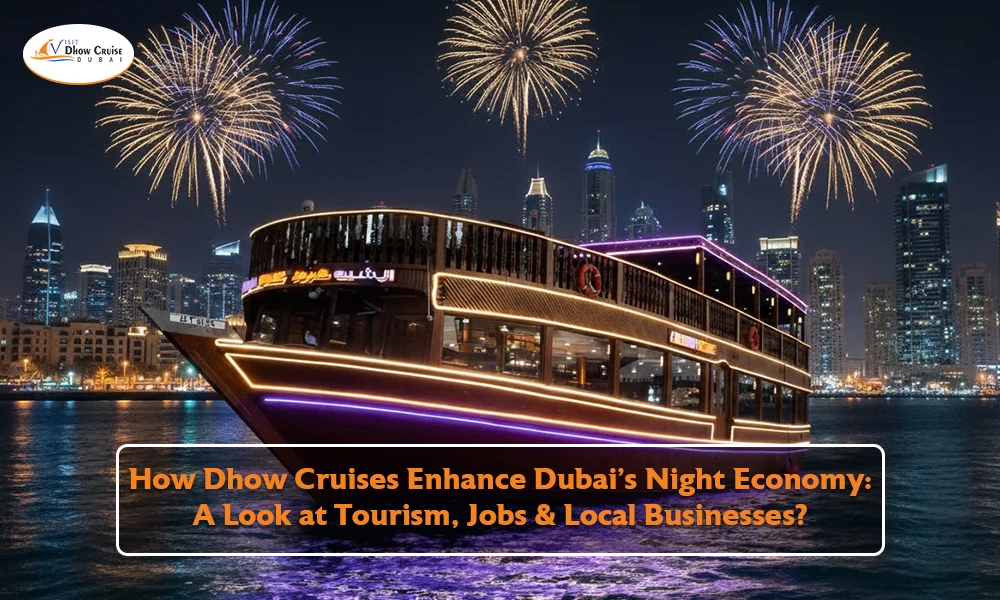
Dhow Cruises Boost Night Economy
-
Overview of Dubai’s Night Economy
The night economy of Dubai can be defined as the extensive scope of activities, entertainment and services that make the city lively and active even after the sun goes down. Night time tourism has become a core of the economic development in Dubai; the city has invested heavily in ensuring that its night time attractions include manmade landmarks and waterfront areas, shopping at night, and dining out. The city is dedicated to lighting projects, safety infrastructure, and 24-hour leisure experience, as demonstrated in such iconic areas like Dubai Marina, Al Seef, Dubai Creek, and Bluewaters Island.
The most important feature of this nighttime energy is the dhow cruises, which are the old wooden boats converted into floating restaurants and entertainment spots. They connect the skyline of the modern city with its maritime tradition, and, therefore, they are one of the main elements of the night tourism ecosystem of Dubai.
-
The Role of Dhow Cruises in Attracting Night-Time Tourists
A dhow cruise is among the most memorable evening experiences of Dubai to most of the visitors. With the skyscrapers of the city gleaming on the water and the bridges glowing with color, tourists are able to dine, listen to music as well as experience cultural performances in these peaceful boats.
Dhow cruise is particularly popular among international tourists who want to have a safe, scenic and family-friendly sessions during the time of night. It could be the panoramic skyline of the Marina, the light of the Water Canal Bridge, or the nostalgic atmosphere of the Dubai Creek, the scenery is romantic and calming to look at. Notably, dhow cruises would lengthen visitor expenditure beyond the day activities- making tourists spend time for Dubai night life economy.
-
Contribution to Local Jobs & Employment
The Dhow cruises are an essential source of job creation in various areas.
- Crew and Operations: The deck staff, engineers and captains are involved in safety and navigation.
- Hospitality: Waiters, buffet attendants, chefs and kitchen helpers serve hundreds of people each night.
- Entertainment: Tanoura dancers, magicians, DJs and musicians make the onboard experience alive.
- Maintenance and Logistics: Cleaners, repair workers and dock workers facilitate day-to-day operations.
- Customer Service: Customer service is finalized by the Ticketing agents, booking executives, and photographers.
Seasonal employment increases drastically during peak months (November-January). This is directly aligned with the UAE economic development plans of the waterfronts, and it is in line with the Dubai tourism employment objectives.
-
Impact on Small & Local Businesses
The impact of dhow cruises on the economy is far reaching beyond the boats. Souvenir stores, cafes, and textile sellers also enjoy pre and post cruise traffic. There is also a steady income of parking operators, taxi drivers, and flower decorators. In the case of the private dhow events, the cake vendors, local entertainers and the party planners receive stable evening work.
Local catering suppliers, including spice merchants and produce farmers, even on the back stage contribute to the continuation of these operations. In a way, Dhow cruises will empower small businesses which constitute the core of the service economy in Dubai.
-
Boost to Culinary Tourism
Dinner dhow cruises are an entry to the UAE and Middle Eastern culture of cuisine. Grilled kebabs and Arabic mezze to international buffets, these cruises expose the visitors to the local tastes. Local food suppliers benefit because the demand of fresh and quality products is high, and fusion menus allow local chefs and international caterers to collaborate and enhance the image of Dubai as a global food destination.
-
Support for Heritage & Cultural Tourism
In addition to recreation, dhow cruises are also significant in maintaining the heritage tourism in Dubai. The use of traditional wooden dhows is used to represent the maritime heritage of the emirate and onboard cultural entertainment such as Tanoura dance and live oud music can make the guest relate to the Arabian arts. Such combination of the traditional and the contemporary luxury characterizes the brand of tourism in Dubai – where tradition and innovation meet.
-
Impact on Waterfront Development
Dubai Marina, Dubai Creek, and Dubai Water Canal are among the districts that remain active at night due to the success of dhow cruises. The frequent flow of visitors will foster cafes, stores, and promenade sellers to stay longer, and this makes it safer and livelier. These cruises do not just beautify the waterfront but also maintain the commercial ecosystem of the waterfront even after sunset.
-
Increased Spending Across the City
Dhow cruises are encouraging night time spending habits between 7 PM and 11 PM-periods that would otherwise attract economic slowdown. Prior to boarding, guests tend to spend on taxis, coffee, or snacks, whereas after boarding, they have desserts, shisha lounges, or walks around the Marina. This night time money flow sustains an even larger system for Dubai night enterprises.
-
Events, Celebrations & Private Bookings
The city has a vibrant night economy, which is further boosted by the private dhow rentals for the corporate events, birthdays, anniversaries, proposals, Christmas and New Year celebrations. Such events involve decorators, event planners, photographers, videographers, and entertainers – building a whole chain of value for evening-based revenue.
Conclusion
Dhow cruises are not only a tourist event, but also a foundation of vibrant night economy in Dubai. They interlink the economic, cultural, and social vibrations of the city at night through job creation and small business development, heritage and culinary tourism. With Dubai still undertaking its water front projects, dhow tours will still be a beacon of how culture can be used to spur economic achievement in the modern world- illuminating the skyscrapers and the lives of thousands of individuals under them.


